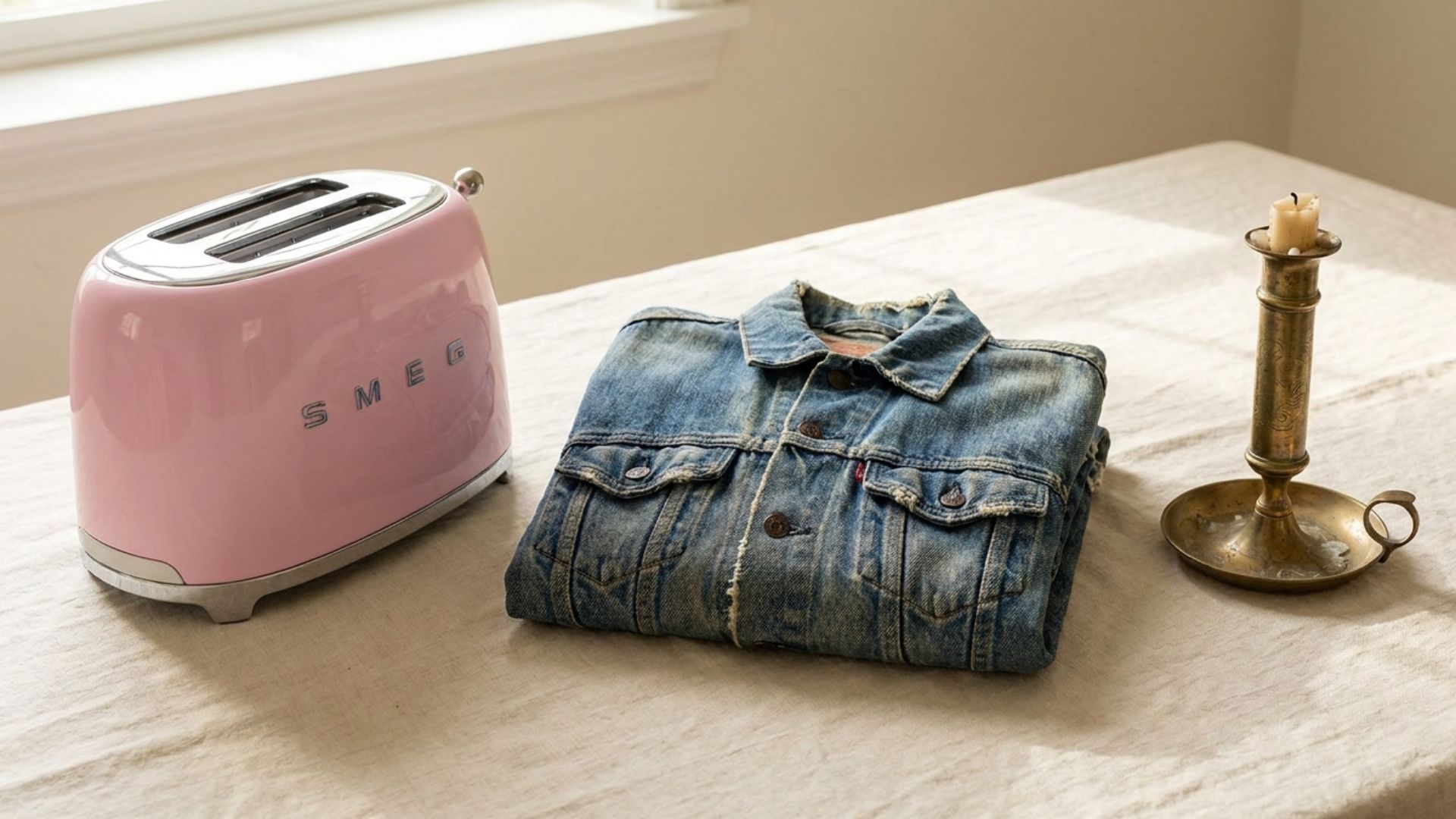
You’re at an estate sale. A dealer points to a chair and calls it “vintage.” Two booths down, an identical chair is labeled “antique” — and priced three times higher. Across the aisle, someone’s selling a brand-new lamp described as “retro.” Same showroom, three different words, three completely different price tiers.
The terms get used interchangeably in everyday conversation, but in the antiques trade — and increasingly in fashion, furniture, and decor — they mean very specific things. Knowing the difference protects you from overpaying, helps you describe what you own accurately, and tells you what you’re actually looking at when something catches your eye.
Here’s the short version: retro is a style. Vintage is an era. Antique is an age. That’s the entire rulebook. The rest is detail.
The 20/100 Rule
If you remember nothing else from this article, remember these three benchmarks:
- Antique: 100 years old or older. This isn’t opinion — it’s the U.S. Customs and Border Protection definition, used by museums, appraisers, and most of the antiques trade as the bright line.
- Vintage: Between 20 and 99 years old. The lower bound is debated (some say 25, some say 30), but 20 years is the most widely-used industry threshold.
- Retro: New items made to look old. Age is irrelevant; what matters is the deliberate evocation of a past style.
Notice the structure: antique and vintage are about when something was made. Retro is about how something looks. A 1955 Frigidaire is vintage. A new SMEG fridge styled like a 1955 Frigidaire is retro. They sit on the same kitchen aesthetic, but they live in different categories.
What Is Retro?
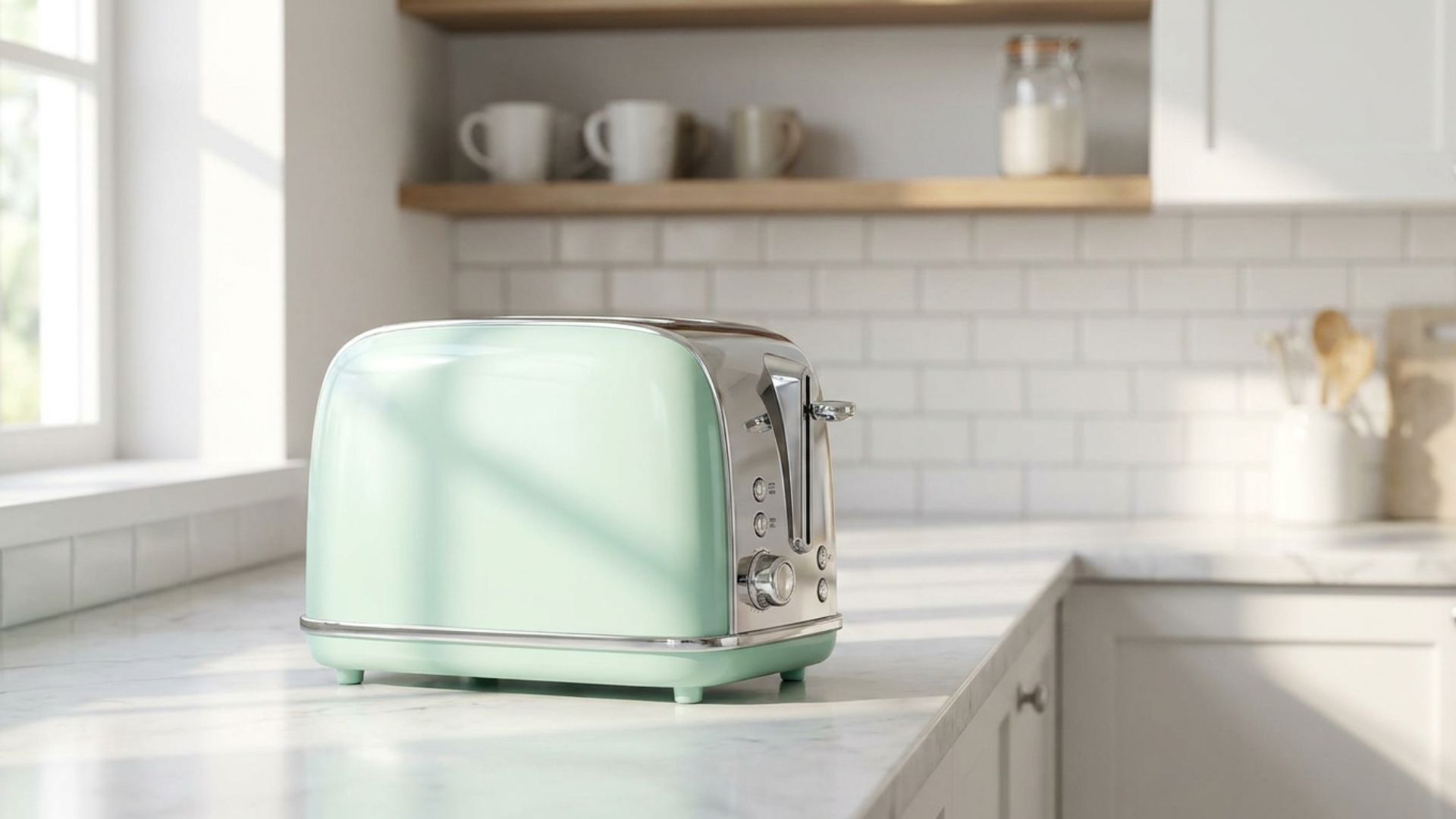
The word retro comes from the Latin retrogradus — “moving backward.” It entered English in the 1960s, originally describing fashions that consciously borrowed from earlier decades. Today it describes any newly-made object designed to evoke an earlier era.
Key word: newly-made. A retro item is, almost by definition, not old. A retro 1950s diner that opened in 2024 is retro. The 1950s diner that’s been there since 1953 is just a diner — or, if you’re being precise, a vintage one.
Retro shows up everywhere:
- Design: retro fonts, retro logos, retro typography
- Appliances: SMEG fridges, Big Chill ovens, retro toasters
- Fashion: new clothing modeled on 1970s silhouettes, retro sunglasses
- Tech: modern televisions styled like 1950s sets, “retro” gaming consoles
The aesthetic associations are usually bold and confident: saturated mid-century colors, chrome accents, rounded forms, hand-painted signage. Retro tends to lean nostalgic and optimistic — it borrows from the eras of postwar prosperity, space-age design, and disco glamour.
Crucially, retro doesn’t require authenticity. A poster designed yesterday in Procreate can be perfectly retro. The skill is in the styling, not the provenance.
What Is Vintage?

Vintage is where things get interesting — and where most disagreements happen.
The widely-accepted definition: vintage describes an authentic item from 20 to 99 years ago, in original condition, that reflects the style and craftsmanship of its era. So as of 2026, anything made between 1927 and 2006 is fair game.
But there’s nuance. A plain white T-shirt from 1995 is technically 30+ years old, but most dealers wouldn’t call it vintage — it has no character. The word implies something of its time: a 1995 Levi’s denim jacket with the original tag, a 1985 Carhartt chore coat with patina from a working life, a 1970s record player with the original tonearm. The age matters, but the expression of the era matters more.
The fashion industry uses a stricter rule: 20-25 years is “vintage,” 50+ years is “true vintage.” Furniture dealers often use 30 years. Jewelry uses different brackets again. The boundaries shift by category, but the principle holds: vintage is old enough to be distinctive but not old enough to be antique.
Some categories where vintage is especially valuable:
- Clothing: vintage band tees, vintage denim, vintage designer pieces
- Furniture: mid-century modern, Danish modern, Memphis Group
- Cars: classic American, European sports cars, certain pickup trucks
- Vinyl: original pressings, first editions, rare label runs
- Watches: vintage Rolex, Omega, Hamilton
The financial implication is real. An authentic vintage 1985 Levi’s Trucker jacket can sell for $200-$400; a brand-new identical reproduction sells for under $100 at retail. That gap is the vintage premium — and it’s why the word matters.
For more on building a wardrobe around vintage finds, see our guide to retro dresses for women.
What Is Antique?

Antiques are the strict end of the spectrum. The line is bright: 100 years old, no negotiation.
This isn’t a marketing definition — it has a legal basis. U.S. Customs law treats items produced more than 100 years before the date of importation as antiques, with specific duty implications. Major auction houses, appraisal organizations, and the antiques trade all follow the same threshold.
So in 2026, an antique is anything made in 1926 or earlier.
A few practical implications:
Furniture. Most antique furniture you’ll encounter at estate sales or in the antiques district comes from three broad eras: late Victorian (1880s-1900), Edwardian (1900s-1910s), and pre-Depression American (1920s). Anything Art Deco from the 1920s sits right at the edge of the antique cutoff — much of it has crossed the threshold only in the last few years.
Jewelry. The terminology gets more granular here. “Antique jewelry” technically means 100+ years old. But the trade also uses “Georgian” (1714-1837), “Victorian” (1837-1901), “Edwardian” (1901-1915), and “Art Deco” (1920-1935) as specific era markers. The first three are now solidly antique; Art Deco is the newest category to cross the threshold.
Silver. Sterling silver, hallmarks, and silverplate from before 1926 are antique. This category retains value especially well because the underlying material (pure silver content) has independent worth.
Cars and trucks. Most U.S. states have legal categories for antique vehicles, typically requiring 25 years for “classic” registration and 45+ years for “antique” plates. These state-specific definitions are distinct from the customs definition.
The shorthand to remember: vintage describes an era. Antique describes a milestone. Once an item crosses the 100-year line, it becomes antique — period.
For older pieces worth investing in, see our guide to antique-inspired holiday decorating.
Side-by-Side: The Quick Reference
| Retro | Vintage | Antique | |
|---|---|---|---|
| Age | Any (often new) | 20-99 years | 100+ years |
| Defines | Style and aesthetic | Era authenticity | Age + authenticity |
| Example | SMEG retro fridge (new) | 1985 Levi’s jacket | 1880s Victorian armchair |
| Where value comes from | Design appeal | Cultural nostalgia, scarcity | Rarity, history, provenance |
| Best for | Decorating, fashion, design | Collecting, wardrobe staples | Investment, legacy pieces |
| Authenticity matters? | No | Yes | Yes (and verifiable) |
The Gray Areas
Of course, real life resists clean categories. A few common edge cases:
“Modern vintage” is a marketing phrase, not a real category. It typically describes new items with a vintage aesthetic — which, by our definition, is just retro with a more flattering label. If you’re shopping and someone calls something “modern vintage,” interpret it as “retro-styled.”
The 80-year furniture rule. Some furniture dealers use 80 years as the antique threshold, on the grounds that the techniques and materials shifted dramatically after WWII. This is industry shorthand, not legal definition — but if a dealer calls something “antique” that’s 85 years old, you now know why.
Reproduction antiques. A reproduction Chippendale chair made in 1955 is 71 years old. It’s authentic in the sense of being a real object from 1955 — but it’s not antique (under 100 years) and it’s not really vintage in the cultural sense (it was already imitating an earlier era when made). The trade calls these “reproduction” or “revival” pieces, and prices them accordingly.
Limited editions and instant collectibles. A 2024 sneaker drop limited to 100 pairs may be collectible from day one, but it isn’t vintage. Collectibility and vintage status are different things. Vintage requires age; collectibility requires demand.
When does vintage become antique? Mathematically: when it crosses 100 years. So a 1926-made item is antique today; a 1928-made item becomes antique in 2028. The transition is one calendar year at a time.
Why It Matters
These distinctions aren’t pedantry. They have real consequences:
For shoppers: dealers price retro, vintage, and antique very differently. A new retro-styled coffee table might cost $400. An authentic 1965 mid-century modern coffee table might cost $1,200. An antique 1890s parlor table might cost $3,500. Same shape, same room — three different categories, three different price ladders.
For collectors: insurance, appraisal, and resale all hinge on accurate categorization. An item insured as “antique” but actually only 60 years old won’t pay out at antique value if it’s lost.
For sellers: in most U.S. states, knowingly mislabeling a vintage piece as antique constitutes a deceptive trade practice. Online platforms (eBay, Etsy, 1stDibs) have specific category rules that enforce these definitions.
For decorators: mixing all three intentionally is the foundation of nearly every great room. Antique fireplace mantel, vintage rug, retro lamp. The categories aren’t competing — they’re complementary. But you have to know which is which to mix them well.
Frequently Asked Questions
Is something from the 1990s vintage?
Can something be both vintage and retro?
How do I know if an item is really antique?
Are antiques always more valuable than vintage?
What's the difference between antique and antiquity?
Is 'vintage' the same as 'secondhand'?
Does condition affect the categorization?
The Bottom Line
You don’t need to memorize these definitions to enjoy any of the three. But knowing them changes how you shop, what you value, and how you tell the story of the things in your home.
Retro is a creative choice — a new object that nods to the past. Vintage is a survivor — a real piece of an earlier era that made it this far. Antique is a milestone — old enough that age itself becomes part of its value.
Three categories, three different reasons to love them. The trick is knowing which is which.